
Unlocking B2B insights through AI-enhanced data collection.
Emporia and Voiceform used AI-moderated voice responses to gather insights on innovation and AI adoption from B2B respondents, enhancing participant engagement and research efficiency.
Emporia and Voiceform used AI-moderated voice responses to gather insights on innovation and AI adoption from B2B respondents, enhancing participant engagement and research efficiency.
In partnership with Voiceform, Emporia conducted a comprehensive study to explore B2B professionals' perspectives on innovation and the impact of AI on their industries. Leveraging Emporia’s verified audience and Voiceform’s AI-moderated voice response platform, this study aimed to capture nuanced insights from a diverse set of participants across different industries and seniority levels.
Emporia fielded the study with 205 B2B professionals, spanning senior leaders, decision-makers and individual contributors across finance, technology, education and healthcare. This diverse audience reflected a genuine cross-section of roles and sectors, so perspectives on innovation and AI could be compared meaningfully by both industry and seniority.
Participants were invited to respond to a series of AI-moderated questions on Voiceform’s platform, which enabled them to record their answers verbally. Voiceform’s AI technology facilitated a streamlined data collection and synthesis.
How professionals feel about innovation and AI depends less on the technology itself and more on where they sit, their industry and their level.
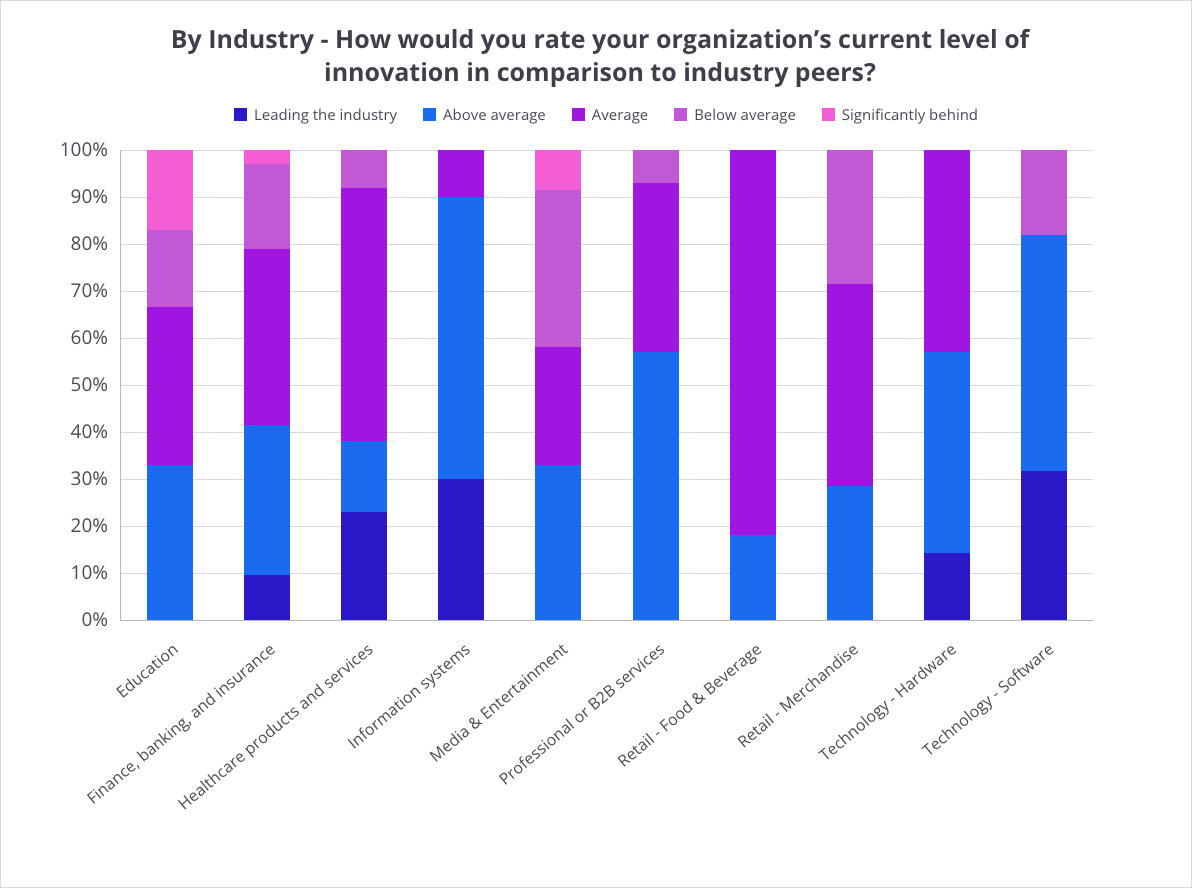
The innovation confidence gap runs along industry lines.
Confidence in innovation was far from even across industries. Professionals in information systems and technology software stood out, reporting high confidence in their organizations' ability to innovate. In retail, education, and media, that assurance faded noticeably, with respondents expressing markedly less confidence in how well their organizations could keep pace.
Leaders are more bullish on innovation than their employees.
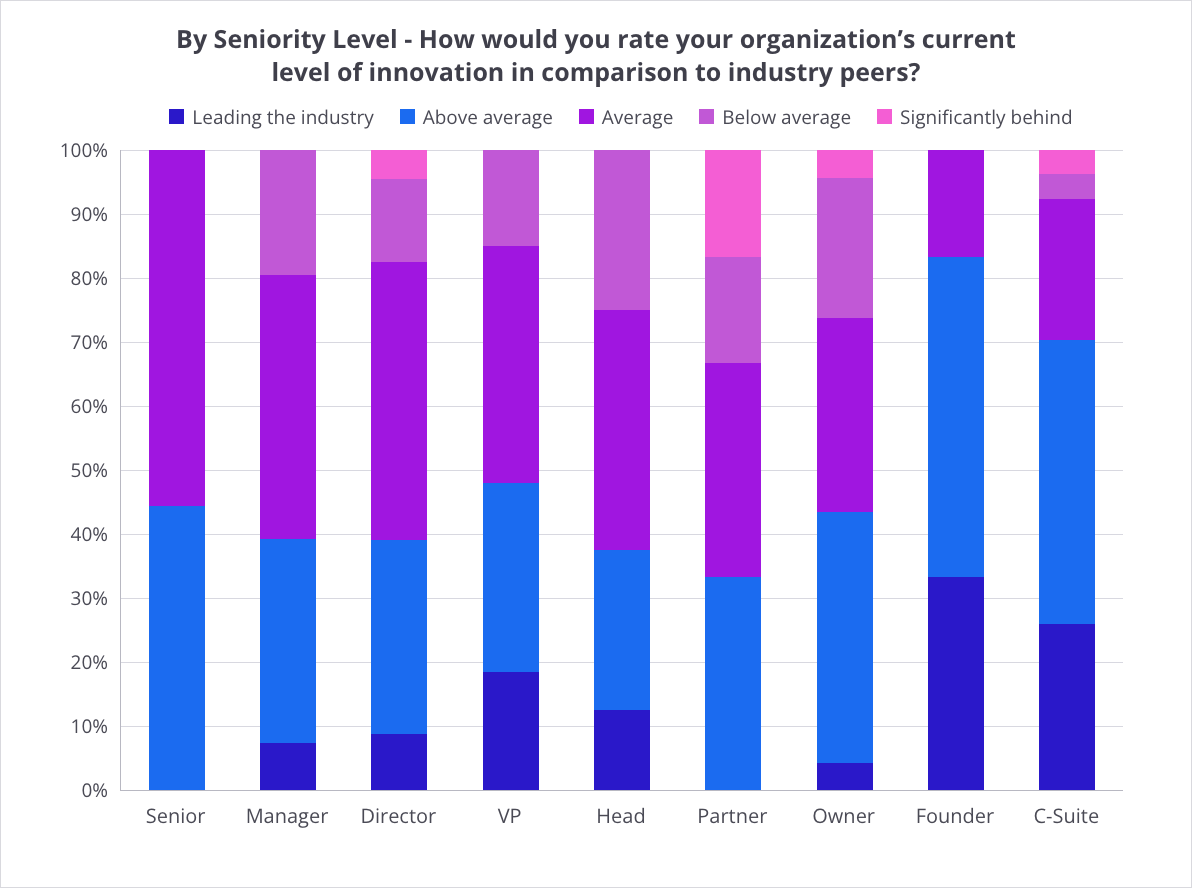
Senior leaders consistently rated their organizations' innovation more positively than the employees executing the day-to-day work. Leadership tended to see a company that innovates; the front line, closer to the actual work, saw something more measured. For any executive reading their own internal numbers, it's a reminder that a single company-wide average can mask two very different realities.
Job security in the face of AI varied by role.
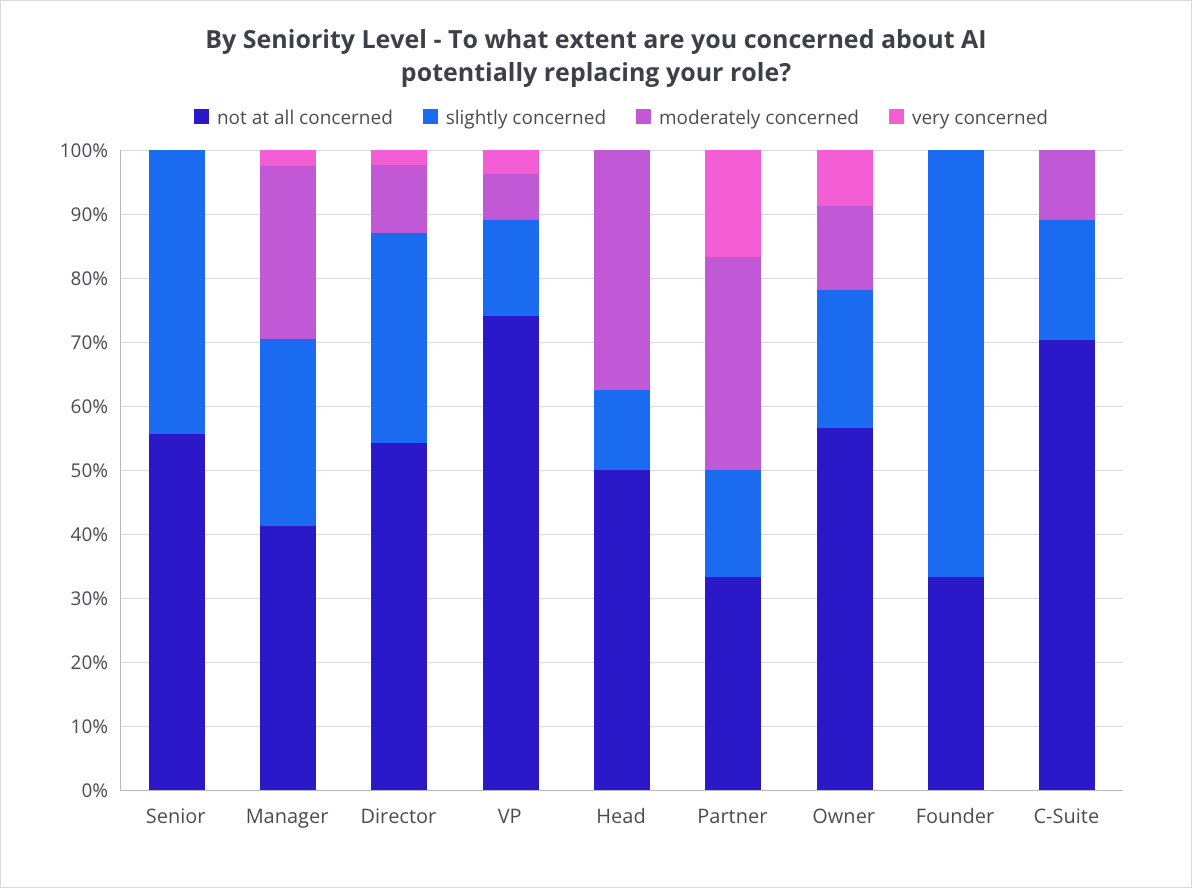
Attitudes toward AI and job security differed based on the nature of professionals’ work. Those whose work depends on creativity, strategic thinking, and human interaction felt relatively insulated, confident that the human element of their roles would remain hard to replace. Technology and finance professionals took a more guarded view, expressing moderate concern that automation could reshape their roles in the years ahead. Taken together, the responses pointed to a clear throughline: AI anxiety ran highest among the people who saw the biggest share of their own work as vulnerable to being automated away.
A more efficient path to richer answers.
Participants appreciated Voiceform’s AI-moderated voice response feature, citing ease of use and the ability to articulate their thoughts more thoroughly compared to traditional survey formats. The voice recording feature not only enhanced engagement but also contributed to richer, more detailed responses. As businesses continue to navigate the complexities of AI adoption and innovation, such methodologies provide a powerful means of understanding diverse perspectives across industries.
With the ability to reach professionals across more than 140 industries, Emporia assembled a sample that spanned the sectors that mattered most to Quickbase. Operations and technology leaders came from construction, manufacturing, software, energy and beyond, ensuring the insights reflected how these roles operate in different environments. Explore more industries and attributes of Emporia's expert audience


Voiceform is a survey platform that combines structured questions with voice, video, and AI to capture richer responses and surface insights in minutes. Teams use it to build conversational surveys, reach respondents, and automatically transcribe, translate and analyze the results, turning open-ended feedback into usable data at scale.


.jpg)